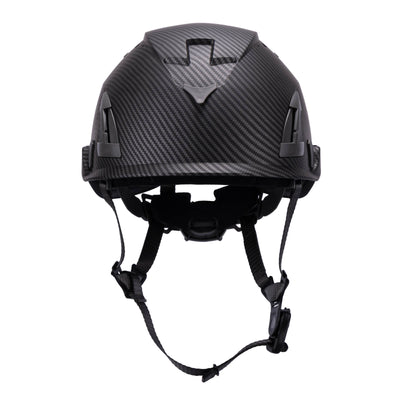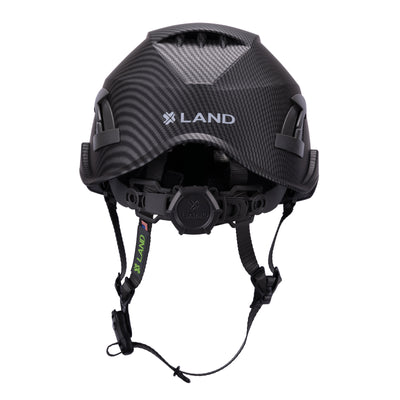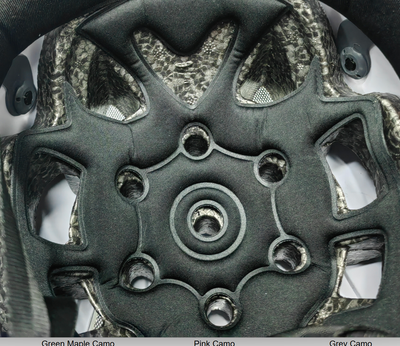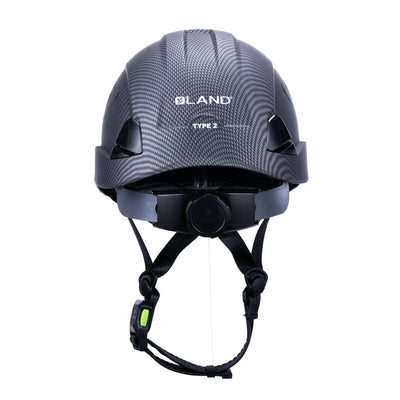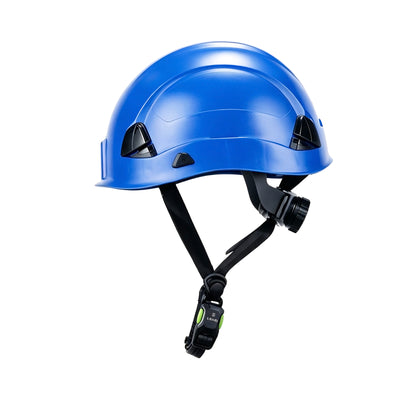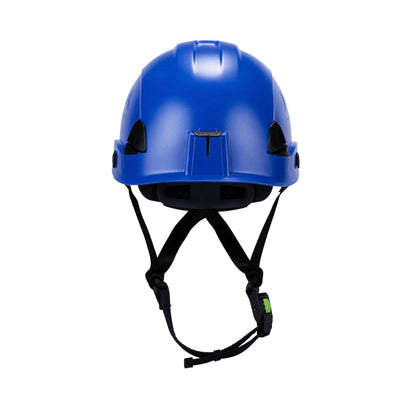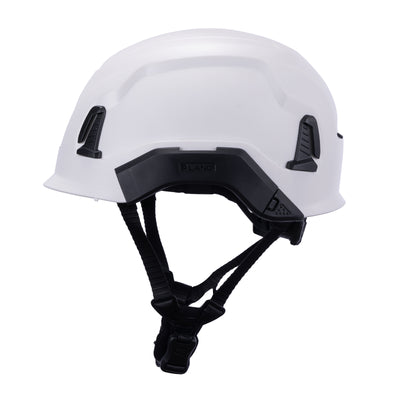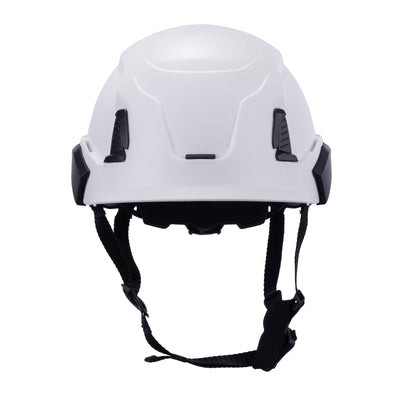


A safety helmet may look simple from the outside, but proving that it can meet recognized safety requirements involves much more than checking the shell.
Before a LAND Type I safety helmet reaches the jobsite, testing helps evaluate how the complete helmet performs, from the outer shell and impact-management system to the suspension and other components.
At LAND, testing happens at more than one level. Our manufacturing team performs testing and quality checks during development and production, while qualifying helmet models are also submitted for independent laboratory testing to verify performance against applicable ANSI/ISEA Z89.1 requirements.
Here is a closer look at what goes into testing a Type I safety helmet.
What Does Type I Mean?
Under ANSI/ISEA Z89.1, industrial helmets are classified according to the impact protection they are designed to provide.
A Type I helmet is designed and tested for protection from impacts to the top of the head.
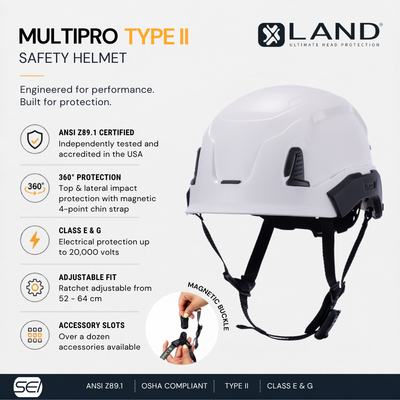
This is different from Type II protection, which addresses both top and lateral impact requirements.
But simply designing a helmet as a Type I model does not prove that it meets the standard. The completed helmet must be evaluated against the applicable performance requirements.
Testing Starts at the Factory
Helmet testing does not begin only when a finished product is sent to an outside laboratory.
During development, our factory can evaluate samples before moving forward with larger-scale production. This gives the engineering and manufacturing teams an opportunity to identify potential problems earlier and verify that the helmet is performing as intended.
Depending on the product and development stage, factory evaluation may examine areas such as:
-
Shell and liner construction
-
Suspension and fit-system operation
-
Strap and retention components
-
Component positioning
-
Assembly consistency
-
Impact-management performance
-
Penetration resistance
-
Material and component consistency
If testing reveals a concern, the team can investigate the helmet's materials, tooling, components, construction, or manufacturing process before proceeding.
Test → Evaluate → Adjust → Retest → Verify
The goal is not simply to produce a helmet that looks correct.
The goal is to manufacture a helmet that performs consistently.
Impact Testing: What Happens When Something Hits the Helmet?
One of the key areas evaluated for Type I industrial head protection is performance against impacts to the top of the helmet.
During laboratory testing, specialized equipment is used to evaluate how the helmet manages impact energy and how much force is transmitted through the helmet system.
This is important because a safety helmet is more than its outer shell.
The shell, suspension or impact liner, fit system, and overall construction work together as a system to manage impact forces.

Penetration Testing: Evaluating the Shell Against Falling Objects
Type I testing also evaluates resistance to penetration at the top of the helmet.
This type of testing helps determine whether the helmet can resist a specified pointed impact without the test object contacting the headform underneath.
The shell geometry, material, thickness, and complete helmet construction can all contribute to performance.
Testing Under Different Conditions
Safety helmets are not always used in comfortable indoor environments.
Depending on the applicable test requirements, helmets may be conditioned before performance testing so their behavior can be evaluated after exposure to specified environmental conditions.
This helps evaluate whether the helmet continues to meet the required performance criteria after defined conditioning rather than evaluating only a new helmet under ordinary room conditions.
Electrical Classification Is Separate From Helmet Type
Type I describes the helmet's impact-protection classification. It does not, by itself, tell you whether the helmet provides electrical protection.
Electrical performance is identified separately through helmet classes such as Class C, Class G, and Class E, depending on the particular helmet configuration and its documented certification.
For example, a Type I Class C helmet and a Type I Class E helmet may share the Type I impact classification while having very different electrical-performance requirements.
That is why buyers should always check the exact Type and Class marked for the specific helmet rather than relying on appearance alone.
Factory Testing Is Only Part of the Process
Internal factory testing is valuable during product development and production, but it is not a substitute for independent conformity testing or certification where those are required.
A manufacturer can use internal testing to identify problems, evaluate changes, monitor production, and prepare products for external testing.
Independent laboratory testing provides another level of evaluation.
That is where COLTS Laboratories comes into the process.
Independent Testing at COLTS Laboratories
LAND helmet models submitted for applicable third-party evaluation are tested by COLTS Laboratories, an independent laboratory that performs industrial head-protection testing to ANSI Z89.1 requirements.
COLTS' head-protection testing capabilities include areas such as:
-
Force transmission
-
Penetration
-
Energy attenuation
-
Electrical insulation
-
Flammability
-
Retention
-
High- and low-temperature testing
The exact tests performed depend on the helmet's applicable classification and certification requirements.
Independent testing helps provide objective evidence that a submitted helmet configuration satisfies the applicable performance requirements rather than relying only on the manufacturer's own internal testing.

What Does ANSI/ISEA Z89.1 Mean?
ANSI/ISEA Z89.1 is the American National Standard for Industrial Head Protection.
The standard establishes classifications and performance/testing requirements for industrial head protection.
This is why it is more accurate to say that a helmet meets or is tested to ANSI/ISEA Z89.1 requirements rather than saying that ANSI itself tested or certified the helmet.
For LAND customers, the markings on the individual helmet and its product documentation identify the specific Type, Class, and standard applicable to that model.
From Testing to Production
Passing an initial test does not mean quality control stops.
Helmet manufacturing requires consistency.
Materials, molding, assembly, suspension installation, straps, hardware, and other components all need to remain consistent with the approved product configuration.
Our manufacturing process connects development, testing, production, and quality control so that findings can be communicated back to the teams responsible for the product.
Materials & Components → Manufacturing → Assembly → Factory Testing & QC → Independent Testing → Production
When an issue is identified, the goal is to understand why it occurred—not simply replace one failed sample.

Why This Matters When Choosing a Safety Helmet
When purchasing head protection, specifications on a product page only tell part of the story.
Behind a properly tested safety helmet are engineering decisions, material selection, tooling, manufacturing controls, internal evaluation, and independent testing.
For employers and safety professionals, this is why it is important to look beyond appearance and ask:
-
What standard does the helmet meet?
-
Is it Type I or Type II?
-
What electrical Class applies?
-
Has the specific configuration been independently tested?
-
Are the certification and product markings available?
-
Can the manufacturer support replacement products and components?
At LAND, our goal is to provide professional head protection backed by documented specifications and testing, not simply a helmet that looks the part.
Tested Before the Jobsite
A safety helmet's real value is in how it performs when protection is needed.
By combining factory testing and quality control with independent laboratory evaluation, LAND works to verify that qualifying helmet models meet their documented safety requirements before they reach the people who rely on them.
Looking for safety helmets for your crew? Explore LAND Type I safety helmets or contact our team for product specifications, certification information, and bulk-order assistance.
LAND Helmets
Address: 5480 Katella Ave #212, Los Alamitos, CA 90720, USA
Phone: (714) 886-2013
Email: info@landhelmets.com
For product questions, compatibility assistance, or order support, contact LAND Helmets through its official website.