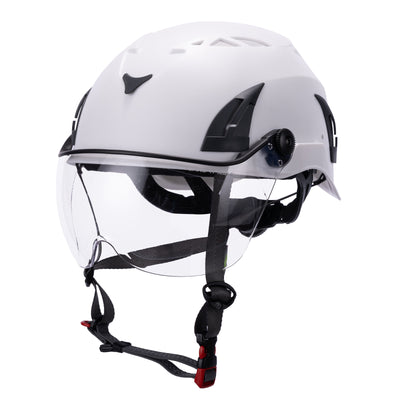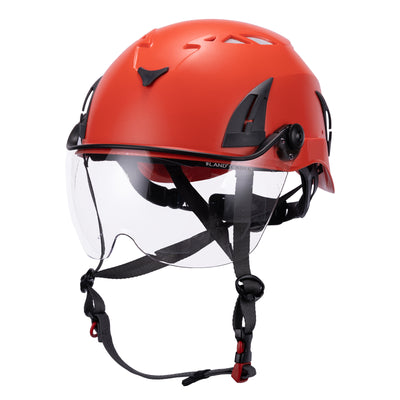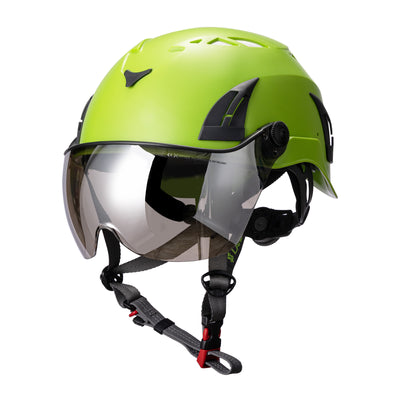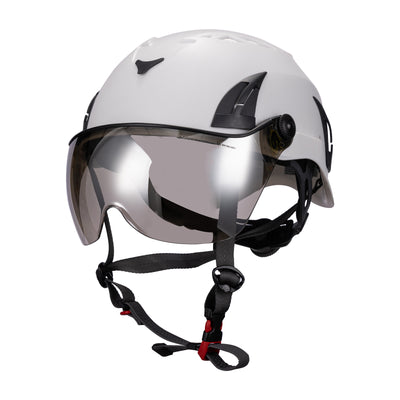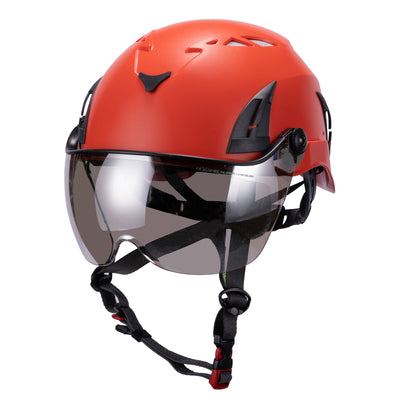




A climbing helmet should fit securely, sit level on your head, and remain stable when you move. It should feel snug without creating painful pressure points, and the chin strap should stay comfortably fastened beneath your chin.
Whether you're rock climbing, working in trees, performing rope access, or working at height, proper climbing helmet fit is an important part of your safety equipment setup.
In this guide, we'll explain how to fit a climbing helmet, what to look for when adjusting one, and how the LAND ClimbPro Climbing Helmet makes those adjustments possible.
1. How Should a Climbing Helmet Fit?
A properly fitted climbing helmet should:
-
Sit level on your head rather than tilted too far backward or forward.
-
Cover the intended areas of your head according to the manufacturer's instructions.
-
Feel snug without causing uncomfortable pressure.
-
Stay stable when you turn, tilt, or gently shake your head.
-
Have a securely fastened, properly adjusted chin strap.
The most important test is stability. If your helmet slides forward, tips backward, or moves noticeably from side to side, you may need to adjust the retention system or choose a different helmet size or shape.
A helmet that feels comfortable while standing still may not remain secure during climbing movements. Always check the fit before beginning your activity.

2. How to Measure Your Head for a Climbing Helmet
Before adjusting your helmet, make sure you're starting with the correct size.
Step 1: Measure your head circumference
Use a flexible measuring tape and wrap it around the widest part of your head, typically just above your eyebrows and ears.
Keep the tape level and snug without pulling it too tightly.
Step 2: Compare your measurement with the helmet's sizing range
Different climbing helmets accommodate different head sizes.
For example, the LAND ClimbPro features an adjustable rear ratchet system designed to fit head circumferences of approximately 52–63 cm.
Step 3: Check the helmet's shape
Head circumference is only one part of proper sizing. The helmet must also fit the shape of your head.
If the helmet creates uncomfortable pressure in one area, even when correctly adjusted, you may need a different fit.
Tip: A helmet's adjustment range does not guarantee a comfortable fit for every head shape. Always try the helmet on and follow its specific fitting instructions.
3. How to Adjust a Climbing Helmet
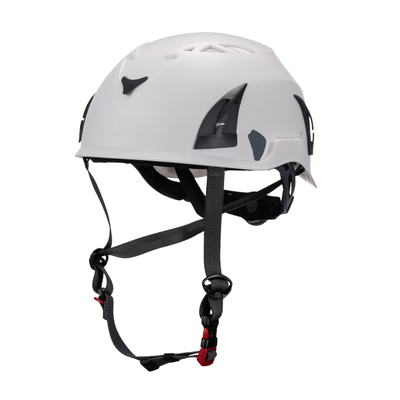
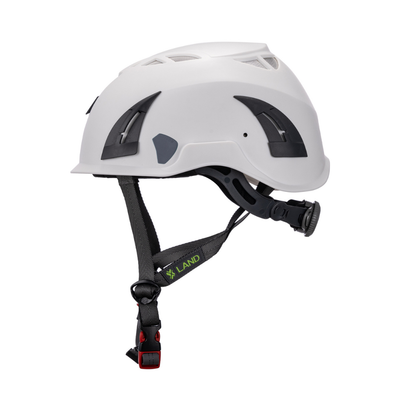
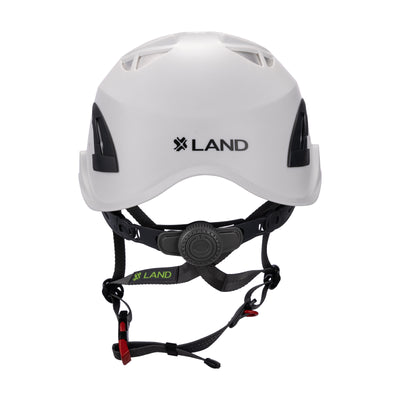
The LAND ClimbPro features a rear dial adjustment system and adjustable chin strap, making it a useful example for demonstrating the fitting process.
Step 1: Loosen the rear adjustment dial
Before putting on the helmet, loosen the ClimbPro's rear ratchet system to create enough room for your head.
This allows you to position the helmet correctly before tightening it.
Step 2: Position the helmet level on your head
Place the helmet on your head so that it sits evenly and covers the intended protective areas.
Avoid positioning the front too high on your forehead or allowing the helmet to tilt backward.
The helmet should feel balanced rather than resting heavily on one side.
Step 3: Adjust the rear dial
With the helmet correctly positioned, gradually tighten the rear dial until the fit feels snug and secure.
The adjustment system should hold the helmet comfortably in place without excessive pressure.
If the helmet feels painfully tight, loosen the dial slightly and reassess the fit.
ClimbPro feature: Its detachable, replaceable rear ratchet system allows the fit to be adjusted within the helmet's specified size range.
Step 4: Fasten and adjust the chin strap
Secure the chin strap beneath your chin.
Adjust it so that it remains comfortably snug without restricting normal jaw movement.
Make sure the straps lie flat and are positioned correctly around your ears, according to the helmet's instructions.
The chin strap is an important part of the helmet's retention system and should remain fastened while climbing.
Step 5: Perform a helmet stability check
With the helmet properly secured:
-
Gently turn your head from side to side.
-
Look upward and downward.
-
Check whether the helmet shifts excessively.
-
Verify that the chin strap and buckle remain secure.
The helmet should remain correctly positioned during these movements.
If it moves significantly, readjust the dial and straps before repeating the test.
Step 6: Check for comfort and pressure points
Wear the helmet for several minutes and pay attention to how it feels.
A properly adjusted helmet should remain secure without creating painful pressure points.
Check the forehead, sides, and back of your head for discomfort.
If the helmet cannot be adjusted to provide both stability and comfort, consider another size or model.

4. What Makes the LAND ClimbPro Different?
The LAND ClimbPro Climbing Helmet is designed for climbing and work-at-height applications where a secure fit, adjustability, and ventilation are important.
Adjustable rear ratchet system
The ClimbPro features a detachable and replaceable rear dial adjustment system, accommodating head sizes of approximately 52–63 cm.
This allows wearers to fine-tune the fit for their head circumference.
10 ventilation zones
Climbing, rope access, and tree work can involve sustained physical activity.
The ClimbPro incorporates 10 ventilation zones designed to promote airflow and improve comfort during demanding activities.
ABS shell and EPS liner
The helmet combines an impact-resistant ABS outer shell with an energy-absorbing EPS liner.
These materials work together as part of the helmet's protective construction.
Adjustable chin strap
The ClimbPro's chin strap helps retain the helmet in its intended position when properly fitted and fastened.
Climbing and industrial helmet standards
The ClimbPro is listed by LAND as meeting EN 12492 for mountaineering helmets and EN 397 for industrial safety helmets.
Always verify that the specific helmet model and its markings meet the standards required for your activity or workplace.
Explore the LAND ClimbPro Climbing Helmet
5. Common Climbing Helmet Fit Problems
Even with an adjustable helmet, several common mistakes can affect comfort and stability.
| Common problem | What to check |
|---|---|
| Helmet slides backward | Check helmet position and rear adjustment |
| Helmet shifts from side to side | Check size, shape, and retention tension |
| Helmet feels painfully tight | Loosen the adjustment and reassess sizing |
| Chin strap feels uncomfortable | Check strap length, routing, and position |
| Helmet moves when looking down | Recheck the complete retention system |
| Helmet causes localized pressure | Consider whether the shell shape suits your head |
If adjustments cannot correct the problem, the helmet may not be the right fit for you.
6. Does a Climbing Helmet Need a Chin Strap?
Yes. A properly secured chin strap is an essential part of a climbing helmet's retention system.
Climbing and work-at-height activities can involve unusual body positions, repeated movement, and situations where helmet retention is especially important.
A chin strap helps keep the helmet in place when fitted according to the manufacturer's instructions.
For helmets used in climbing applications, always follow the applicable standard, workplace requirements, and product instructions.

7. Can You Wear Accessories With a Climbing Helmet?
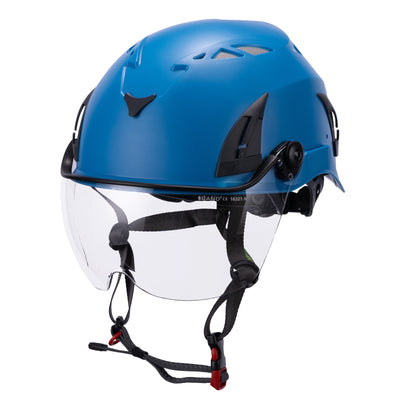
Some climbing helmets are designed to accommodate compatible accessories such as headlamps, visors, and face protection.
The LAND ClimbPro includes accessory mounting features for compatible equipment.
Depending on your application, you may want to explore:
-
Headlamps: For climbing or working in low-light conditions.
-
Safety visors: For compatible eye and face protection configurations.
-
Face shields and hearing protection: Where specifically supported by the helmet and required for the task.
Always verify accessory compatibility before use. Attachments should not interfere with helmet fit, chin strap function, or the protective performance required for your work.
8. Frequently Asked Questions About Climbing Helmet Fit
How tight should a climbing helmet be?
A climbing helmet should be snug enough to remain stable during movement without causing painful pressure. The adjustment system and chin strap should be secured according to the manufacturer's instructions.
Should a climbing helmet move when you shake your head?
A properly fitted helmet should remain stable during gentle head movements. Significant shifting or sliding may indicate an incorrect size or adjustment.
How do I know if my climbing helmet is too small?
Signs may include painful pressure points, difficulty positioning the helmet correctly, or an inability to achieve a comfortable fit even with the adjustment system loosened.
How do I know if my climbing helmet is too big?
A helmet may be too large if it continues to shift excessively, even after the adjustment system and chin strap have been correctly secured.
Should a climbing helmet cover your forehead?
Yes. A climbing helmet should sit in the position specified by its manufacturer, generally level on the head rather than tilted backward and exposing too much of the forehead.
Can I wear a hat under my climbing helmet?
Only if the manufacturer permits it and the added layer does not interfere with the helmet's fit or protective function. Bulky hats can affect helmet positioning and stability.
Can I use a climbing helmet for arborist work?
Some climbing helmets are designed for both climbing and professional work-at-height applications. However, suitability depends on the helmet's certification, the hazards present, and applicable workplace requirements.
The LAND ClimbPro is marketed for climbing, arborist work, rope access, and related activities. Always confirm the required standards before selecting a helmet for professional use.
When should I replace my climbing helmet?
Inspect your helmet before use and follow the manufacturer's replacement instructions. A helmet subjected to a significant impact may require replacement even if damage is not immediately visible. Cracks, damaged straps, compromised adjustment systems, or other signs of deterioration are reasons to remove it from service and assess replacement.
Find the Right Fit With LAND ClimbPro
A climbing helmet should feel secure, comfortable, and stable throughout your activity.
The key is to choose the correct size, position the helmet properly, adjust the retention system, secure the chin strap, and check the fit before every use.
With its adjustable rear ratchet, ventilation zones, and climbing-focused design, the LAND ClimbPro offers an option for climbers and professionals looking for an adjustable climbing helmet.
Explore the LAND ClimbPro Climbing Helmet
LAND Helmets
5480 Katella Ave. #212
Los Alamitos, CA 90720
(714) 886-2013
info@landhelmets.com