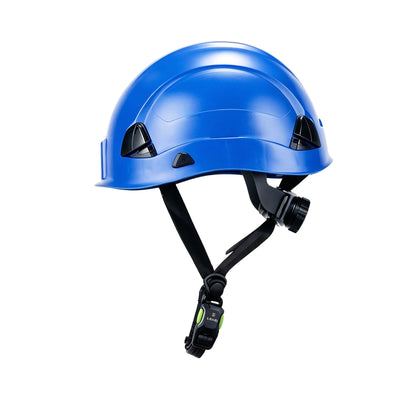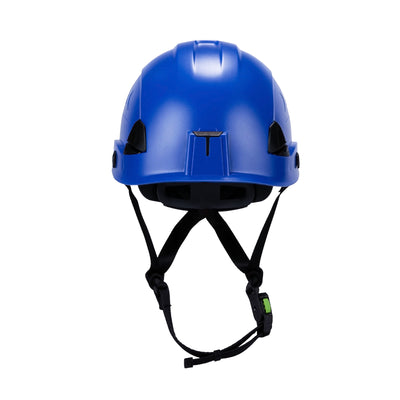


When companies choose helmets for a crew, safety ratings are usually one of the first things they look at.
What type is it? What class is it? Does it provide the protection required for the job?
Those questions should always come first.
But they aren't the only questions that matter.
A helmet can meet the required standard and still not be the best choice for the people who will wear it for hours at a time.
How does it fit? Is it adjustable? Is ventilation important? What other PPE does the worker need? Can accessories be added without making the setup unnecessarily complicated?
At LAND, those are the questions that come after the rating.
Comfort Looks Different From Job to Job
There isn't one feature that suddenly makes a helmet "comfortable."
For someone working outdoors in the heat, ventilation may make a big difference.
For another worker, it might be a secure suspension system and easy fit adjustment.
Someone wearing hearing protection throughout the day may care about how their earmuffs integrate with the helmet. Someone working outside may want a sunshade. Another crew may need electrical protection, meaning a vented helmet isn't appropriate at all.
That's why LAND offers different helmet platforms rather than trying to make one helmet do everything.
And it's also why comfort should be considered alongside the actual work environment.
EcoPro: Keeping the Essentials Simple
For companies outfitting a large crew, more features aren't always the answer.
Sometimes the goal is simply to provide workers with a lightweight, adjustable helmet that provides the required protection without unnecessary complexity.
That's where the LAND EcoPro fits in.
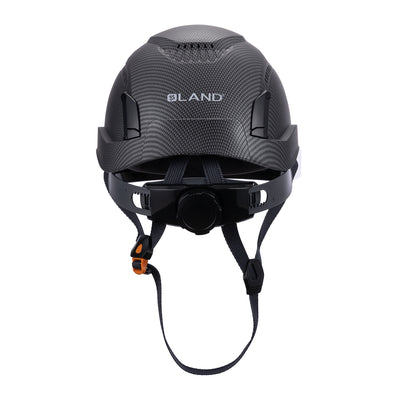
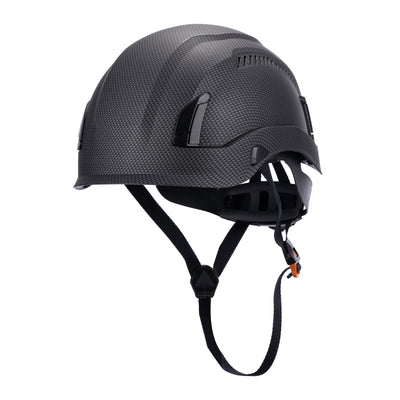
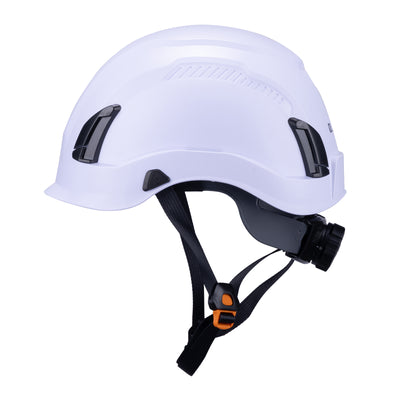
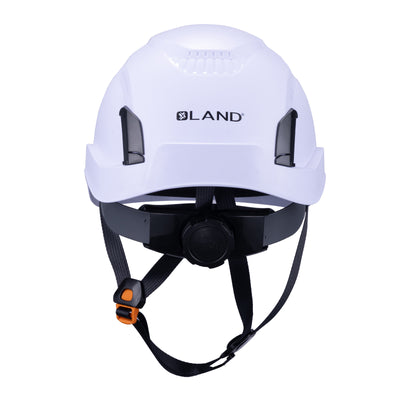
The vented EcoPro Class C combines Type I protection with integrated ventilation, a 6-point suspension system, smooth glide-ratchet adjustment, and a lightweight, low-profile design. LAND also offers a separate non-vented Class E configuration for jobs requiring electrical protection.
Those features address some very practical everyday concerns.
The suspension helps distribute the helmet across the head rather than relying on a single contact point. The ratchet lets workers adjust the fit throughout the day. And on the Class C version, ventilation helps release heat during outdoor and physically demanding work.
For crews that need additional PPE, EcoPro can also be configured with compatible visors, face shields, and earmuffs.
It isn't about adding every possible feature.
It's about giving crews the essentials they actually need at a practical price point.

Frontier: Type II Protection Without Forgetting the Worker
For crews that require Type II protection, the priorities change.
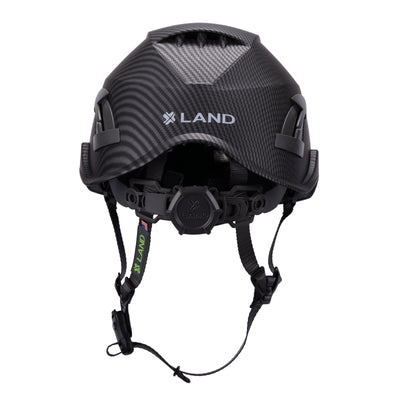
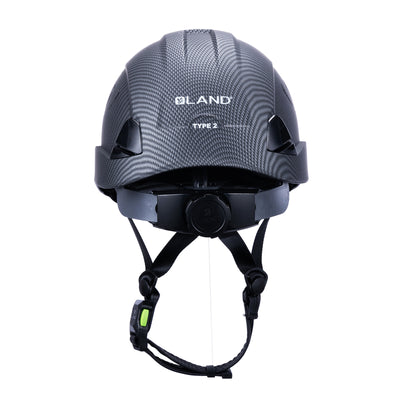
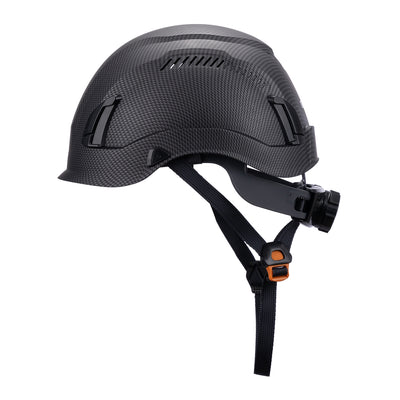
The LAND Frontier is designed to provide protection against impacts from multiple directions rather than focusing only on top-of-head impacts. LAND offers the Frontier in both vented Class C and non-vented Class E configurations, giving companies options based on the hazards present in their working environment.
But the helmet doesn't stop at its Type II rating.
Frontier is designed as part of a broader PPE setup, with compatible clear and smoke visors, hearing protection, a headlamp, sun protection, and other accessories available for different working conditions.
That becomes important when a worker's day involves more than simply wearing a helmet.
A crew may need eye protection for one task, hearing protection around equipment, additional visibility in darker environments, or sun protection during long periods outdoors.
Instead of treating those needs as completely separate from the helmet, they can be considered as part of the overall setup.

MultiPro: When the Setup Needs to Change With the Job
The MultiPro takes that idea even further.
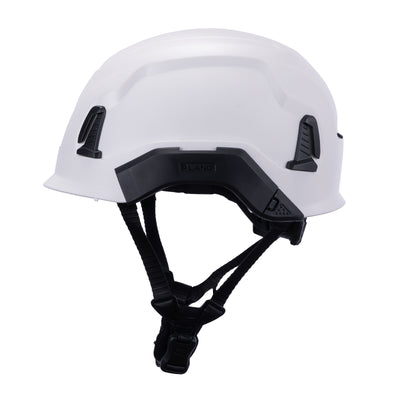
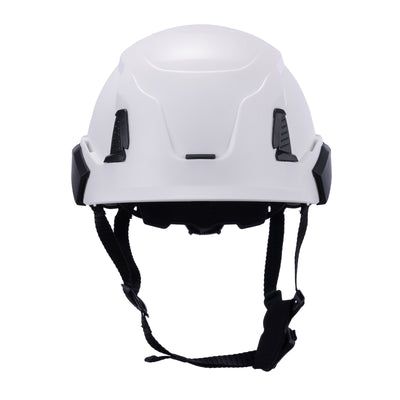
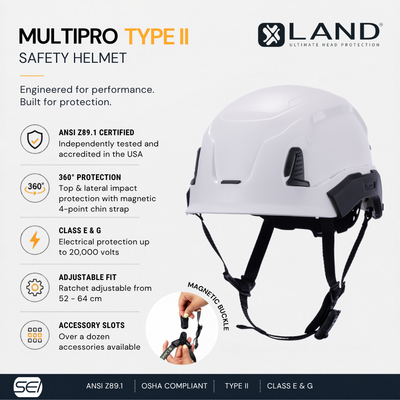
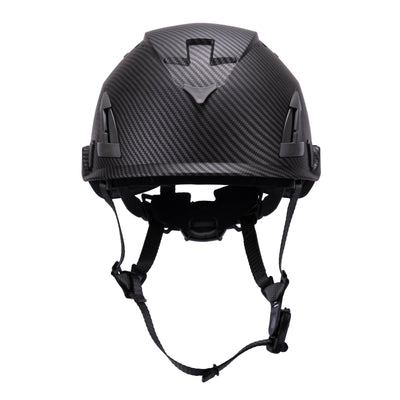
It's a Type II, Class E, non-vented helmet designed for professionals who need both multidirectional impact protection and electrical protection. Its ABS shell, EPS liner, low-profile construction, adjustable fit, chin strap, and lightweight design are intended to provide a secure, balanced setup for extended wear.
But one of the biggest differences is what happens around the helmet.
MultiPro was developed as a modular platform because the same worker may not need the exact same configuration all day.
They may need a visor for one task.
Hearing protection around certain equipment.
A brim while working outdoors.
A headlamp when visibility changes.
And smaller practical accessories, such as a name tag or pen holder, can address everyday frustrations that don't show up on a safety specification sheet.
The point isn't to load the helmet with accessories.
It's to let the helmet adapt to the work.
That can also make things easier for companies. Instead of purchasing completely different helmet systems for every task, crews can start with a protective platform and configure compatible equipment around what individual workers actually need.

AeroPro & ClimbPro: Built for Movement
Some jobs put different demands on a helmet.
For arborists, climbers, rope-access professionals, and workers who spend much of the day moving at height, ventilation, stability, and freedom of movement can become especially important.
That is where the LAND AeroPro and ClimbPro fit into the lineup.
The AeroPro combines a lightweight, low-profile design with adjustable ventilation, a 6-point suspension system, ratchet fit adjustment, and removable, washable comfort padding. Its climbing-style design is especially well suited for workers who are constantly moving, bending, looking up, and working at height.
The ClimbPro follows a similar movement-focused approach, with 10 ventilation openings, a dial-adjustment system, removable liners, an adjustable chin strap, and an EPS impact-absorbing core.
Both can also become part of a larger PPE setup. Depending on the configuration, compatible accessories such as hearing protection, face protection, visors, headlamps, and sun protection can be added for the work being performed.
The idea is simple:
When the job requires more movement, the helmet should be designed with that movement in mind.

Accessories Aren't Just Extras
When evaluating a helmet, it's easy to focus entirely on the shell.
But the worker doesn't experience the shell by itself.
They experience the whole setup.
LAND offers helmet systems that can work with equipment such as clear, smoke, and mirror visors, earmuffs, mesh face protection, headlamps, sunshades, winter protection, chin straps, and replacement components, depending on the helmet model.
Those accessories can address very different problems.
A sunshade can provide additional coverage during outdoor work.
A visor can provide eye and face protection while keeping it integrated with the helmet.
Earmuffs provide hearing protection without requiring an entirely separate head-worn setup.
A headlamp keeps lighting attached to the helmet when workers need their hands free.
And replaceable components can help crews maintain their equipment as parts experience normal wear.
Comfort isn't one accessory. It's how the entire system works together.
One Crew Doesn't Necessarily Mean One Setup
Imagine a company purchasing helmets for 50 employees.
The temptation is to find one helmet, order 50 of them, and consider the job finished.
But those 50 workers may not be doing the same thing.
One group might only require Type I protection and want a straightforward, lightweight setup. EcoPro may make sense for that type of application.
Another crew may require Type II protection and additional accessories. Frontier provides another option.
Workers who require Type II protection, Class E electrical protection, and greater modularity may have different priorities again. That's where MultiPro becomes particularly relevant.
And for climbing, arborist, and other high-mobility applications, LAND has additional platforms such as AeroPro and ClimbPro.
The goal isn't to decide which helmet has the longest feature list.
It's to match the helmet to the work.
Think About Hour Eight, Not Just Minute Five
A helmet can feel perfectly fine when someone tries it on for a few minutes.
The more useful question is what happens later.
Is the worker getting hot?
Does the helmet stay secure while they're bending and moving?
Can they adjust the fit easily?
Does their hearing or face protection work naturally with the helmet?
Are they carrying around features they don't actually need?
These are the kinds of questions that are difficult to answer from a certification label alone.
They're also why features such as ventilation, suspension, adjustability, weight, accessory integration, and replaceable components deserve attention when selecting helmets for a crew.

And Think About Six Months From Now
For a business, helmet selection doesn't end when the first order arrives.
Visors get scratched. Components experience wear. New employees join. Crews grow. Working conditions change.
Suddenly you're not managing one helmet.
You're managing an entire PPE program.
That's why it is worth considering whether replacement parts and compatible accessories are readily available, whether configurations can stay consistent across a crew, and whether the system can adapt when a worker's needs change.
A helmet that works well for the company should make sense on the first day and down the road.
Start With Protection. Then Build Around the Worker.
Standards, ratings, and testing come first.
But once you've established the protection your job requires, don't stop there.
Look at the people who will actually wear the equipment.
Consider fit, adjustment, ventilation, weight, weather, hearing protection, eye and face protection, accessory compatibility, replacement parts, and how long the helmet will be worn each day.
That's why LAND offers different platforms instead of treating every worker and every jobsite the same.
EcoPro keeps things practical. Frontier brings Type II protection into a versatile work-ready platform. MultiPro adds Type II Class E protection with greater modularity for crews whose needs change throughout the day.
Because the right helmet isn't simply the one with the right label.
It's the one that provides the protection your job requires, and makes sense for the person who has to wear it.