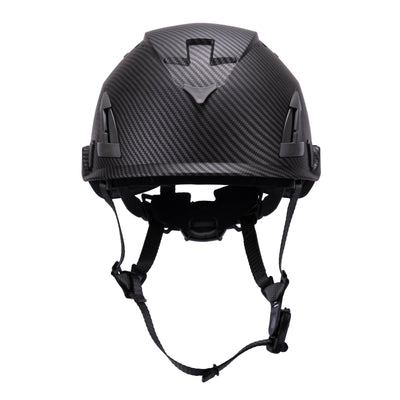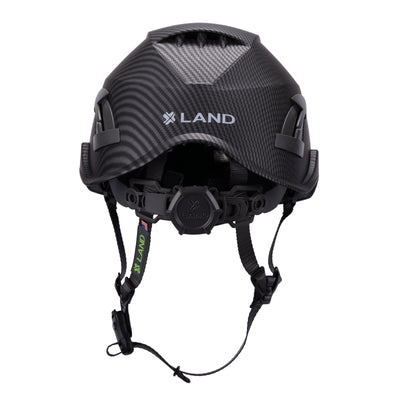


How to Get a Better Safety Helmet Fit With a Small Head
Finding a safety helmet that fits properly can be harder when you have a smaller head.
A helmet may meet the right safety standard, have the features you need, and still feel loose once you put it on.
That does not always mean the helmet is unusable.
Sometimes the issue is how the suspension is adjusted. Sometimes the helmet is sitting incorrectly. In other cases, a smaller adjustment system or different manufacturer approved interior components may be needed.
The important thing is knowing the difference between a helmet that simply needs to be adjusted and a helmet that does not properly fit the wearer.
A safety helmet should not be made to fit by improvising.
The goal is to use the adjustment system and approved components correctly so the helmet sits securely, comfortably, and as the manufacturer intended.
Looking for the Immediate Solution?
If you already wear a LAND helmet and the standard setup feels too large, there are a few things you can look at right away.
Smaller Ratchet Adjustment
LAND offers a smaller ratchet adjuster for workers who need a tighter fit range than the standard system provides.
This is usually the first place we recommend looking if your helmet still feels loose after the normal ratchet has been adjusted correctly.
The smaller ratchet gives you another manufacturer intended option without having to replace the entire helmet.
This is especially useful if you already like your MultiPro, AeroPro, Frontier, EcoPro, or another LAND helmet and simply need the suspension to fit a smaller head more securely.
Chin Strap
The chin strap is another important part of the complete fit.
The ratchet helps control how the helmet sits around the head, while the chin strap helps support retention and stability when the wearer is moving.
If your work involves climbing, looking overhead, bending, or frequent movement, proper chin strap adjustment becomes even more important.
LAND offers replacement chin straps separately so worn or damaged components can be replaced with parts intended for the helmet system.
A chin strap should not be used to compensate for a helmet that is fundamentally too large, but when the helmet is correctly fitted, proper chin strap adjustment can help the complete system feel more secure.
Padded Sweat Pads for Added Comfort
Once the helmet fit is correct, comfort is the next thing to think about.
LAND offers padded sweat pads that provide a softer contact point inside the helmet while also helping manage sweat during long workdays.
For people who experience pressure or discomfort around the front of the helmet, replacing worn padding or using the proper padded sweat pad can make a noticeable difference.
The important thing is to get the fit right first.
Padding should improve comfort inside a properly fitted helmet. It should not be used as makeshift material to force a helmet that is too large to fit.
If you are looking for the quickest place to start, check the ratchet adjustment first, then the chin strap, then the condition and comfort of the interior padding.
From there, it is worth understanding what a properly fitted helmet should actually feel like.
These fit and comfort options are primarily intended for the LAND AeroPro helmet. The smaller ratchet adjuster, replacement chin strap, and padded sweat pads are designed to help AeroPro users fine tune fit and comfort with approved compatible part.

What Does a Properly Fitting Safety Helmet Feel Like?
A good place to start is understanding what you are actually trying to achieve.
A properly adjusted safety helmet should feel secure on the head without needing to be painfully tight.
The helmet should not feel like it is floating above the head.
It should not constantly slide forward toward the eyes.
It should not noticeably shift every time you turn your head.
At the same time, tightening the adjustment system as hard as possible is not the goal either.
Excessive pressure around the head can become uncomfortable during a long shift and may be a sign that you are trying to compensate for a fit problem in the wrong way.
You are looking for a secure and stable fit rather than simply a tight one.
Start With the Adjustment System
Before changing any parts, start with the adjustment system that came with the helmet.
Put the helmet on correctly and tighten the ratchet gradually.
Do not immediately turn it as tight as possible.
Once it feels secure, move your head around.
Look down.
Look up.
Turn from side to side.
Bend forward.
Move the way you normally move during your work.
The helmet should remain reasonably stable through those movements.
If it does, the standard adjustment may already be doing its job.
LAND helmets use ratchet adjustment systems so the wearer can make these changes quickly and easily. Our ratchets are designed to be operated with one hand and can be adjusted while wearing gloves.
That is useful for getting the initial fit right, but it also matters later in the day when a small correction may be needed.
Do Not Judge Fit While Standing Still
One of the easiest mistakes when fitting a work helmet is putting it on, looking in a mirror, and deciding it fits.
That only tells you how the helmet feels while you are standing still.
Workers do not spend eight hours standing completely upright.
An arborist may be looking overhead, bending, climbing, and moving through branches.
A construction worker may repeatedly look up and down, climb ladders, crouch, or work around equipment.
Utility workers can move through a wide range of positions throughout the day.
A helmet that feels secure while standing still may shift once you start moving.
This is why a proper safety helmet fit test should include movement.
If possible, test the helmet while performing movements similar to the work you actually do.
That is much more useful than simply checking whether the ratchet can be tightened around your head.

Check How the Helmet Is Sitting
Sometimes a helmet feels too large because it is not sitting in the intended position.
Before assuming you need different parts, look at the entire suspension setup.
Check that the suspension is installed correctly.
Check that nothing inside the helmet is twisted or out of position.
Make sure the ratchet sits where it is intended to sit around the back of the head.
Look at how high or low the helmet is sitting.
The exact setup will depend on the helmet, so always follow the instructions provided with the specific model.
This may sound obvious, but a small problem in the suspension can change how the entire helmet feels.
What If the Ratchet Is Fully Adjusted and the Helmet Is Still Loose?
This is where smaller headed workers can run into a real problem.
If the standard ratchet has reached the smaller end of its adjustment range and the helmet still shifts excessively, tightening harder is not the answer.
At this point, you should check what fitting options the manufacturer actually provides.
Some helmet systems offer different suspension or adjustment components for different fit needs.
For LAND users, we offer smaller ratchet adjusters separately for people who need a smaller fit range.
This allows someone who likes the helmet and needs its particular features to explore another manufacturer intended fitting option instead of trying to modify the helmet themselves.
That can be especially helpful for crews where most employees are comfortable with the standard ratchet but one or two workers need a smaller adjustment range.
The helmet model can remain consistent while the fit system is better matched to the individual.
Never Fill a Helmet With Random Padding to Make It Smaller
When a helmet feels too large, it can be tempting to add foam, fabric, towels, or other material inside it.
That is not a good way to solve a helmet fit problem.
Safety helmets are designed and tested as systems.
The shell, suspension, padding, straps, and other components are intended to work together.
Adding random material can change how the helmet sits and may interfere with the way the suspension is intended to function.
If additional padding is available, use padding designed and approved for that helmet system.
LAND offers padded sweat pads that can improve comfort and replace worn interior contact material without improvising your own solution.
The important distinction is that comfort padding should be used as intended.
It should not be treated as a way to force an incorrectly sized helmet to fit.
If the helmet still cannot be adjusted securely using the proper components, a different helmet or fitting solution may be necessary.

Comfort and Fit Are Related but They Are Not the Same Thing
This is another area that can be confusing.
A helmet can fit securely and still feel uncomfortable.
A helmet can also feel soft and comfortable while still being too loose.
Those are two separate issues.
The ratchet and suspension primarily help establish the position and stability of the helmet.
The chin strap helps support retention when the worker moves.
Interior comfort components such as sweat pads help with the points where the helmet contacts the wearer.
For someone with a smaller head, all three may matter.
A smaller ratchet may help achieve the necessary adjustment range.
A properly adjusted chin strap can help the complete helmet remain stable during movement.
A padded sweat pad may then make that properly adjusted helmet more comfortable to wear for longer periods.
The goal is not simply to make the inside of the helmet feel tighter.
The goal is to get the fit right first and then improve comfort within that proper fit.
Fit the Helmet With the Rest of Your PPE
Another thing people often overlook is that a helmet is rarely worn by itself.
If you normally wear safety glasses, put them on.
If your work requires earmuffs, test the helmet with them installed.
If you use a visor, try it in the working position.
If you wear gloves, see whether you can still operate the adjustment system comfortably.
All of these pieces can change the way the complete setup feels.
This is particularly important with configurable helmets.
For example, the LAND MultiPro can be used with clear, smoke, or mirror visors, its front and rear brim system, and compatible earmuffs.
The AeroPro is commonly configured around the needs of arborists and tree care professionals.
Other LAND helmets may be selected for different protection requirements and working environments.
Whatever helmet you are using, your final fit test should represent the way you are actually going to wear it.
Your Helmet May Need Readjustment During the Day
Proper helmet fit is not always something you set once in the morning and never think about again.
Conditions change.
Workers sweat.
Equipment is removed and added.
The helmet may come off during a break.
Hair can compress.
Cold weather layers may change how equipment sits.
Small adjustments throughout the day can be normal.
This is one reason we use ratchet adjustment systems throughout the LAND helmet lineup.
Being able to reach behind the helmet and make a small one hand adjustment makes it easier to correct the fit when conditions change.
For someone already working near the smaller end of the helmet's fit range, paying attention to these changes can be especially important.
Check Replaceable Components Too
If a helmet used to fit well and suddenly feels different, head size may not be the problem.
Inspect the components.
Sweat pads can wear.
Chin straps can become worn or damaged.
Suspension components can be affected by regular use.
Parts can be installed incorrectly after cleaning.
Adjustment systems receive a lot of use over the life of a helmet.
A change in fit is a reason to inspect the helmet rather than simply tightening it more.
LAND offers separate replacement components because parts that are regularly used and worn should be serviceable when appropriate.
Always inspect the helmet and follow the instructions for the specific model before replacing or continuing to use any component.
A Simple Small Head Helmet Fit Check
If your safety helmet feels too large, work through the problem in order.
First, confirm that the suspension and interior components are installed correctly.
Then adjust the ratchet gradually.
Test the helmet while looking up, down, turning your head, and bending forward.
Check the chin strap and make sure it is adjusted correctly for the helmet and type of work.
Try the helmet with the PPE you normally wear.
If the helmet remains loose at the smaller end of its intended adjustment range, check whether the manufacturer offers a smaller ratchet or suspension option.
Use only compatible padding and replacement components designed for that helmet.
If you still cannot achieve a secure fit, do not try to force the helmet to work through homemade modifications.
At that point, another size or helmet system may be the better choice.
The Right Helmet Should Fit the Person Wearing It
When people search for a safety helmet for a small head, it is easy to focus entirely on finding the smallest helmet available.
But helmet fit is more than a number.
The adjustment range matters.
The suspension matters.
The chin strap matters.
The way the helmet sits matters.
The other PPE being worn matters.
And comfort matters because the person may be wearing that helmet for hours at a time.
At LAND, we try to provide more than one way to address those needs.
Our helmets are adjustable.
We offer smaller ratchet adjusters for workers who need a smaller fit range.
We offer replacement chin straps.
We offer padded sweat pads for additional comfort.
And we offer replacement parts so the components that affect fit and comfort can be maintained when appropriate.
But the most important advice is the same whether you wear a LAND helmet or another brand.
Do not just make the helmet tighter.
Take the time to fit it properly.
A safety helmet is something you may depend on every day, and getting the fit right is worth a few extra minutes.