

Good Product Development Does Not Stop After Launch
At LAND, we believe a helmet is not “finished” simply because the tooling is completed and the product has entered production.
Once a product reaches customers and end users, we begin receiving another kind of engineering information: real-world feedback.
Sometimes that feedback is about comfort or fit. Sometimes it is about appearance, accessories, or how the helmet feels when worn.
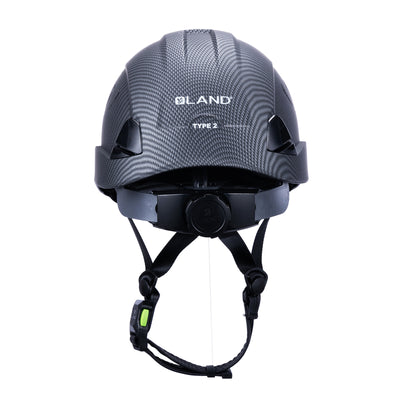
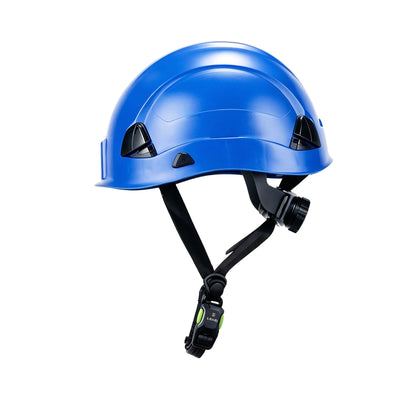
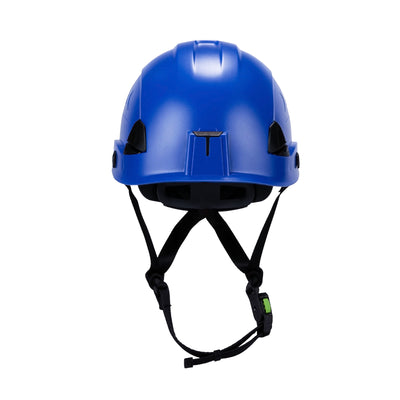
Recently, we received feedback about our LAND Frontier Type II safety helmet:
One customer said, "The helmet looks too tall.”
The customer clarified that the distance between the wearer’s head and the top of the helmet appeared larger than expected.
At first glance, this may seem like a styling issue. But from an engineering perspective, it raises a more important question:
How can we make the Frontier Type II sit lower on the head without compromising the structure and performance requirements behind a Type II helmet?
From Customer Feedback Back to Engineering

We took the feedback seriously and sent it directly back to our R&D team.
Rather than simply changing the outside shape, our engineers returned to the 3D CAD design and reviewed the complete internal architecture.
The objective was not simply:
“Make the helmet shorter.”
The real objective was:
Reduce unnecessary internal height and create a lower-profile helmet while maintaining the structure required for Type II testing.
Our engineering review included:
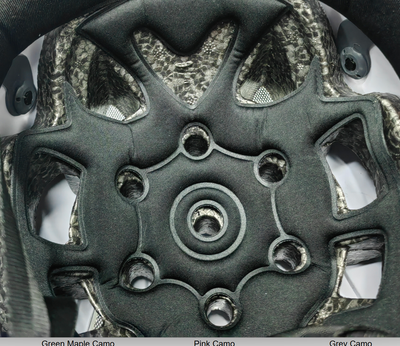
- Head position inside the helmet
- Internal stack height
- Impact-management structure
- Fit-system position
- Suspension and retention geometry
- Padding thickness
- Component clearances
- Shell geometry
The first question is always:
Where is the height actually coming from?
Only after understanding that, can we determine where meaningful optimization may be possible.
3D Engineering Review

This drawing helps explain why lowering a Type II helmet is more complex than simply reducing the outer shell height.
Multiple internal components and structural areas need to work together as one system.
Using the Internal Space More Efficiently
One of the key engineering questions is whether the available internal space can be used more efficiently.
Our team can review opportunities such as:
- Repositioning selected components
- Reducing unnecessary gaps
- Optimizing the fit-system location
- Refining padding geometry
- Adjusting mounting positions
- Improving the relationship between the head and internal structure
- Refining the external profile around the updated geometry
Even a relatively small dimensional improvement can make a noticeable difference in how the helmet sits and looks on the head.
Showing the Improvement in 3D

The drawings can visually highlight:
Original Head Position → Revised Head Position
Original Internal Height → Optimized Internal Height
Original Profile → Lower-Profile Engineering Direction
This allows customers to see how their feedback becomes an actual engineering update rather than simply hearing that “we listened.”
Lower Profile Must Be Balanced With Type II Testing
This is the most important part of the project.
A lower-profile helmet can look:
- Cleaner
- More compact
- More modern
- More sports-inspired
- Better proportioned on the wearer’s head
But the Frontier Type II also needs to maintain the internal architecture required for its intended Type II performance.
We cannot simply remove space or reduce structural thickness for appearance alone.
Our engineering goal is therefore to find the right balance between:
Lower Profile + Better Fit + Better Proportion + Required Type II Performance
The objective is not to make the helmet as low as possible at any cost.
It is to make the Frontier Type II as low-profile and well-proportioned as practical while maintaining the engineering requirements behind Type II testing.

Revised Engineering Direction
Simple callouts can help end users understand the changes:
- Lower head position
- Optimized internal space
- Revised component positioning
- More streamlined profile
Better Products Come From Listening and Engineering

The feedback on the LAND Frontier Type II started with one simple observation:
The helmet appeared too tall on the head.
Instead of treating that as only a cosmetic concern, we went back to the 3D design and reviewed the head position, internal geometry, component layout, and overall helmet profile.
Our goal is clear:
Create a lower, cleaner, more natural-looking profile while maintaining the structure required for Type II testing.
A lower-profile helmet should not be achieved simply by removing critical space or structure. The improvement needs to come from better engineering and more efficient use of the available space.
This is why customer and end-user feedback matters to us.
For LAND, continuous product improvement means:
Listen → Understand → Engineer → Improve