

Your Visor Does More Than Block Wind
When choosing a helmet visor, most professionals naturally think about visibility, wind protection, color and appearance.
But another important consideration is ultraviolet radiation from sunlight.
UV radiation is invisible to the human eye, yet prolonged exposure can affect the eyes over time. That is why the Aeropro visor is designed with UV400 protection, helping shield the wearer's eyes from ultraviolet wavelengths up to 400 nanometers.
But what exactly does UV400, Category 0, Category 3, and visible light transmission mean?
Here is a simple guide.
What Is UV400?
UV400 refers to protection against ultraviolet radiation with wavelengths up to approximately 400 nm.
This range covers both major ultraviolet bands that reach us from sunlight:
- UVA: approximately 315–400 nm
- UVB: approximately 280–315 nm
A UV400 visor is therefore designed to block ultraviolet radiation across the UVA and UVB ranges up to 400 nm.
UV400 = Protection Beyond What You Can See
UV protection should not be confused with how dark a visor looks.
A clear visor can still provide UV400 protection.
Likewise, a dark visor is not automatically better at blocking ultraviolet radiation simply because less visible light passes through it.
The two characteristics are different:
UV Protection = How ultraviolet radiation is filtered
Visible Light Transmission = How much visible light reaches your eyes
Understanding both helps you choose the right visor for your work conditions.

Aeropro Visor Material: Polycarbonate
Aeropro visors are made from PC — Polycarbonate.
Polycarbonate is widely used for helmet visors because it combines:
- Low weight
- Good optical transparency
- High toughness
- Excellent formability
- Suitability for different visor colors and coatings
The visor needs to provide a clear field of vision while maintaining the curved shape required by the helmet.
Double-Sided Hard Coating for Improved Scratch Resistance
Both sides of the Aeropro visor receive a hard coating treatment.
This helps improve resistance to everyday surface scratching compared with untreated polycarbonate.
This is especially useful because helmet visors are regularly exposed to:
- Dust
- Road debris
- Cleaning
- Gloves
- Storage
- Repeated opening and closing
However, scratch-resistant does not mean scratch-proof.
To help maintain optical clarity, the visor should still be cleaned carefully using suitable materials and cleaning methods.

Understanding Visible Light Transmission
Visible Light Transmission, often abbreviated as VLT, describes the percentage of visible light that passes through the visor.
The principle is simple:
Higher VLT = More Light Passes Through
A clear visor normally has a high VLT and is suitable for lower-light conditions.
Lower VLT = Less Light Passes Through
A dark or mirrored visor reduces the amount of visible light reaching the rider’s eyes and is generally intended for bright conditions.
Aeropro currently offers visor options with different light-transmission characteristics.
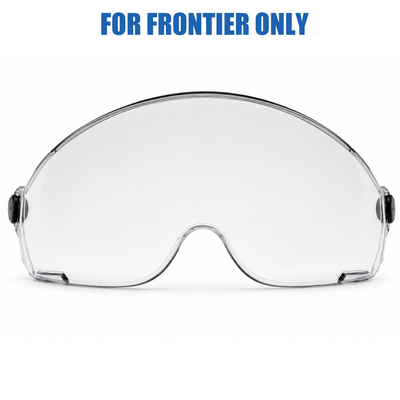
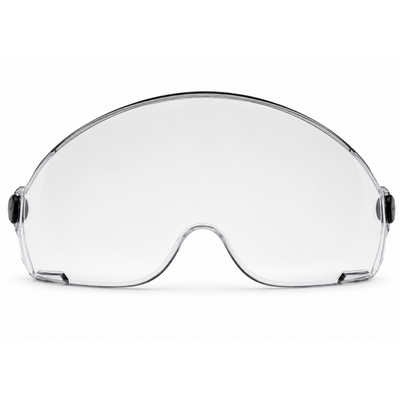
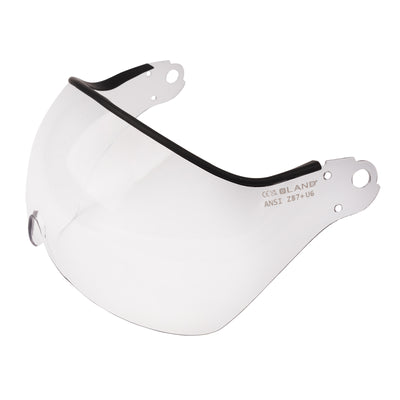
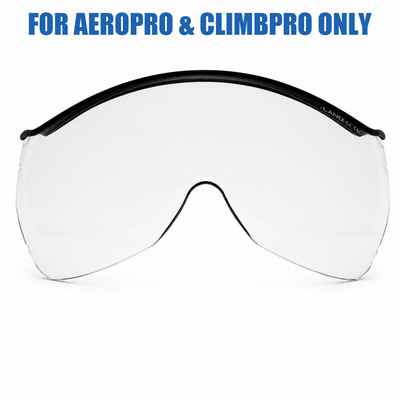
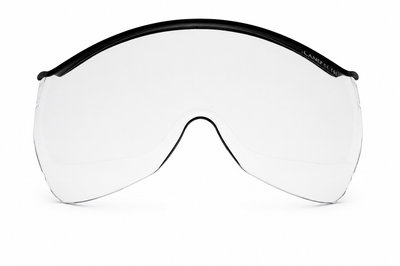
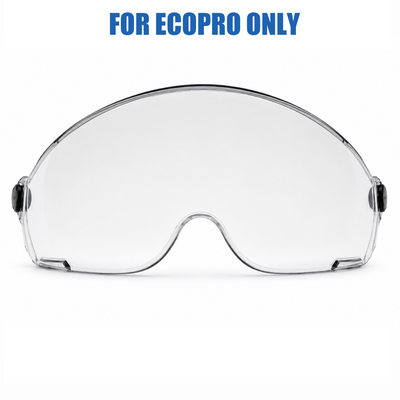
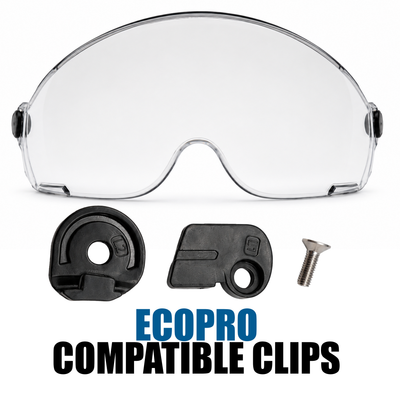
Clear Aeropro Visor
Visible Light Transmission: Approximately 90%
Lens Category: Category 0
The clear Aeropro visor allows approximately 90% of visible light to pass through.
Because of its high light transmission, it is classified as approximately Category 0.
This makes it suitable for situations where maximum visible-light transmission is preferred, such as:
- Cloudy weather
- Overcast conditions
- Low-light environments
- Indoor use where appropriate
- General work environments where a dark tint is not required
Importantly, being clear does not mean giving up UV protection.
The clear Aeropro visor still incorporates UV400 protection.
Clear Doesn't Mean No UV Protection
This is an important point for professionals.
You cannot judge UV protection simply by looking at how dark the visor is.
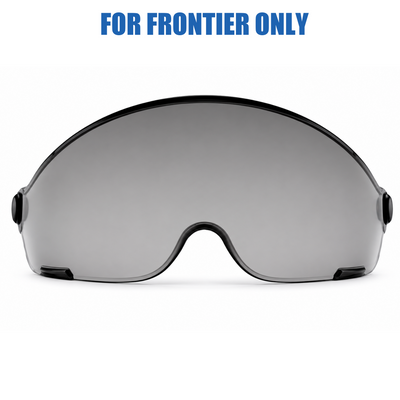
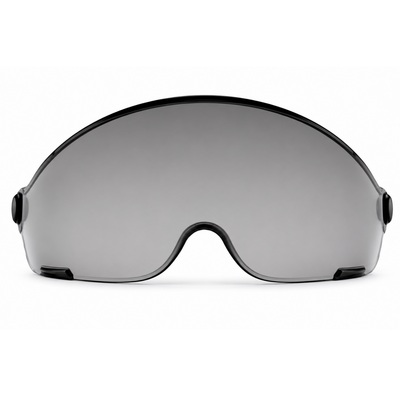
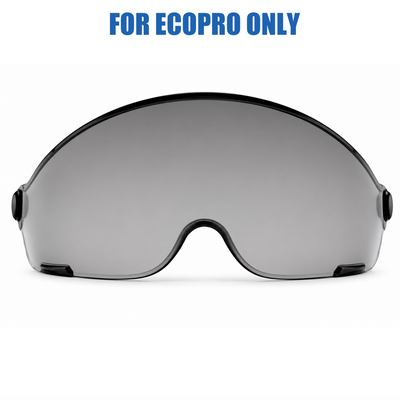
Tint Aeropro Visor
Visible Light Transmission: Approximately 11%
Lens Category: Category 3
The tint Aeropro visor allows approximately 11% of visible light to pass through.
This places it within Category 3.
The darker tint significantly reduces visible-light transmission, making it suitable primarily for bright daylight and sunny outdoor work conditions.
The tint appearance also provides a more neutral visual tone compared with some colored or reflective coatings.
Best suited for:
- Bright sunlight
- Daytime outdoor work
- High-light outdoor conditions
Because relatively little visible light passes through a Category 3 visor, it is not intended for conditions where high light transmission is required.
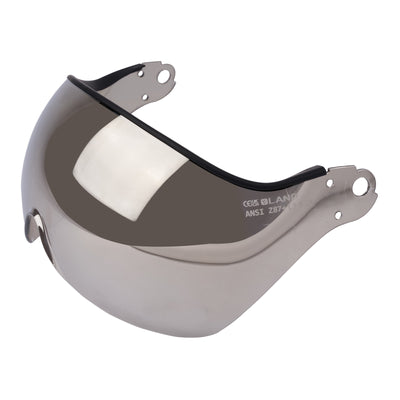
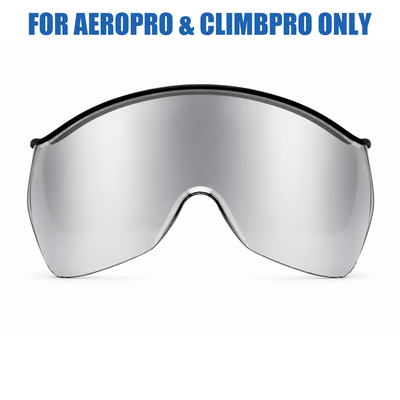
Mirror Aeropro Visor
Visible Light Transmission: Approximately 17%
Lens Category: Category 3
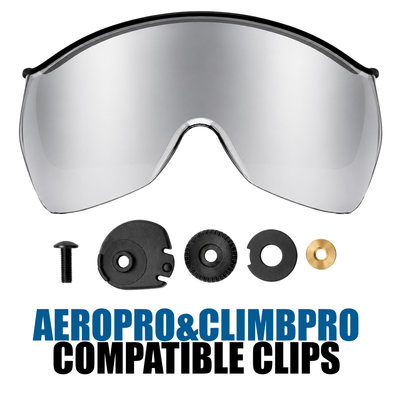
Aeropro mirrored or coated visors have approximately 17% visible light transmission, depending on the specific coating.
They are also classified around Category 3.
The coating creates the distinctive reflective appearance while reducing the amount of visible light reaching the wearer's eyes.
This makes the visor suitable primarily for bright daytime conditions.
Depending on the finish, mirrored visors can also give the helmet a distinctive premium or performance-oriented appearance.
Approximately 17% VLT means:
83% of visible light is reduced before reaching the eyes, while the visor continues to provide UV400 protection.
Aeropro Visor Comparison
| Aeropro Visor | Approx. Visible Light Transmission | Category | Typical Use |
|---|---|---|---|
| Clear | ~90% | Category 0 | Lower light / cloudy / general visibility |
| Mirrored / Coated | ~17% | Category 3 | Bright daylight |
| Tint | ~11% | Category 3 | Strong sunlight / bright daylight |
This illustrates why choosing a visor should not be based only on appearance.
The light-transmission category should match the work environment.

UV400 Protection Is Independent of Lens Darkness
A common misunderstanding is:
“The darker the visor, the stronger the UV protection.”
That is not necessarily true.
The Aeropro clear, tint, and mirror visor options can all incorporate UV400 protection, even though their visible-light transmission levels are very different.
For example:
Clear visor: ~90% VLT
versus
Tint visor: ~11% VLT
The clear visor allows much more visible light through, but UV400 refers specifically to filtering ultraviolet wavelengths, not simply making the visor dark.
That is why users should look for actual UV protection specifications rather than judging protection by visor color alone.
What Does Category 0 Mean?
Category 0 lenses generally transmit a very high percentage of visible light.
Aeropro's clear visor, at approximately 90% VLT, falls within this category.
It is designed primarily to maintain visibility rather than significantly reduce sunlight.
Think:
High Light Transmission → Maximum Visual Brightness
What Does Category 3 Mean?
Category 3 lenses transmit substantially less visible light and are commonly used for strong sunlight.
Both Aeropro's:
- Tint visor — approximately 11% VLT
- Mirrored/coated visor — approximately 17% VLT
fall within the Category 3 range.
Think:
Low Light Transmission → Bright-Sunlight Use

Does the Aeropro Visor Have Anti-Fog Treatment?
Currently, no.
The Aeropro visor includes:
UV400 Protection
- Polycarbonate Construction
- Double-Sided Hard Coating for Scratch Resistance
but the current specification does not include an anti-fog coating.
We believe it is important to communicate this clearly so users understand exactly what the visor specification includes.
Fogging can still occur depending on:
- Temperature
- Humidity
- Airflow
- Outdoor work conditions
- Perspiration during physical work
The absence of an anti-fog coating is therefore something riders should consider according to their intended use.
How to Choose the Right Aeropro Visor
The easiest way is to think about the work environment.
Choose Clear — ~90% VLT / Category 0
When your priority is maximum visible-light transmission.
Choose Mirrored / Coated — ~17% VLT / Category 3
When working mainly in bright daylight and you also prefer a reflective visor appearance.
Choose Tint — ~11% VLT / Category 3
When you want strong visible-light reduction for bright sunny conditions.
Regardless of the tint, UV protection should always be considered separately from visible-light transmission.

Take Care of Your Visor
Even with a double-sided hard coating, good care helps preserve optical clarity.
We recommend:
- Remove loose dust before wiping
- Use clean water or an appropriate mild cleaner
- Use a soft microfiber cloth
- Avoid abrasive materials
- Avoid aggressive solvents or chemicals
- Do not aggressively rub dry dust across the visor
- Store the helmet so the visor is not rubbing against hard objects
A properly maintained visor provides a clearer view during the workday.
Aeropro Visor Technology at a Glance
UV Protection
UV400 — protection against ultraviolet wavelengths up to 400 nm
Material
Polycarbonate (PC)
Surface Treatment
Double-sided hard coating for improved scratch resistance
Anti-Fog
No anti-fog coating
Clear Visor
~90% VLT / Category 0
Mirror/Coated Visor
~17% VLT / Category 3
Tint Visor
~11% VLT / Category 3
Protect From UV. Choose the Right Light Transmission.
A helmet visor is not simply a styling accessory.
Its material, UV protection, surface treatment, tint and visible-light transmission all influence how it performs in different environments.
With Aeropro, professionals can choose the visor configuration that best matches their intended conditions while maintaining UV400 protection and a durable polycarbonate visor construction.